Introducing ActiPatch®

Pop a Patch, Not a Pill.

Over 1 million ActiPatch® devices sold.

Bioelectric pain relief. Surprisingly affordable.

About this milestone

Manufacturer-reported cumulative product sales. This counts devices, not individual customers or clinical outcomes.

Wear it over the spot that hurts, alongside your other care for muscle and joint pain.

Free shipping on ActiPatch® single, double, and triple packs (US addresses only, through December 31, 2026)

Read customer testimonials
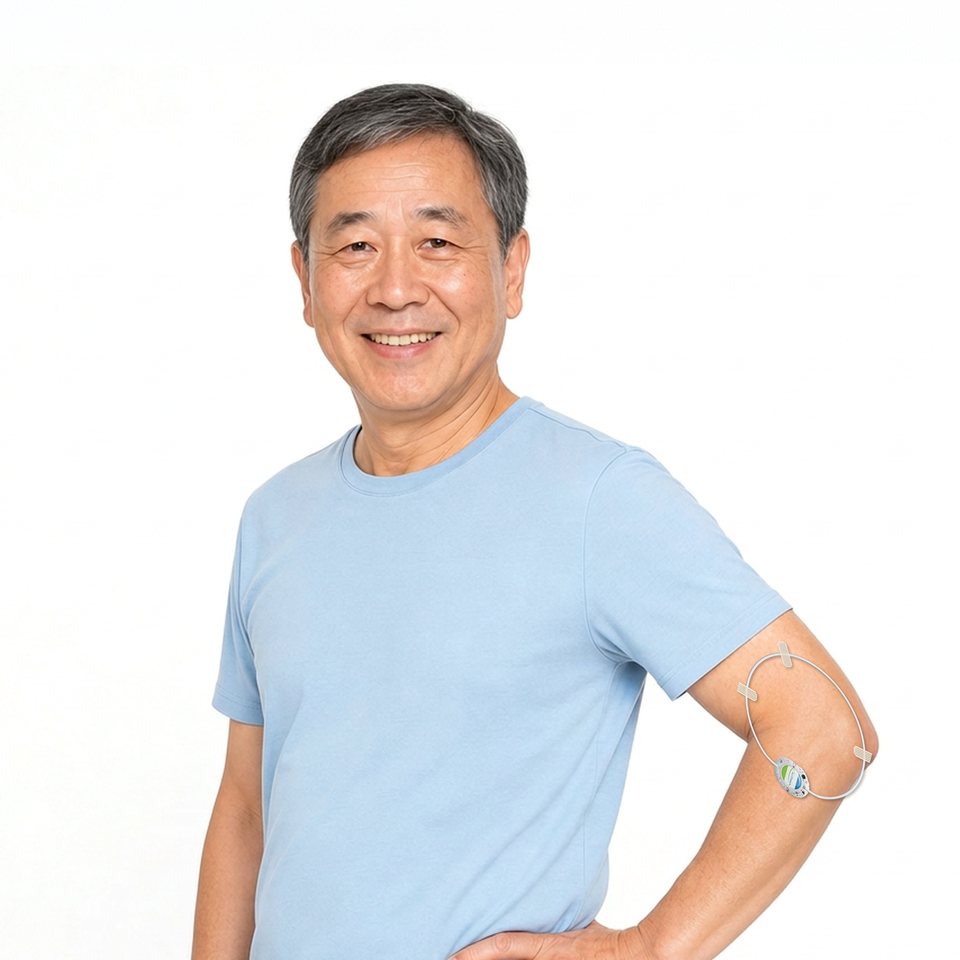
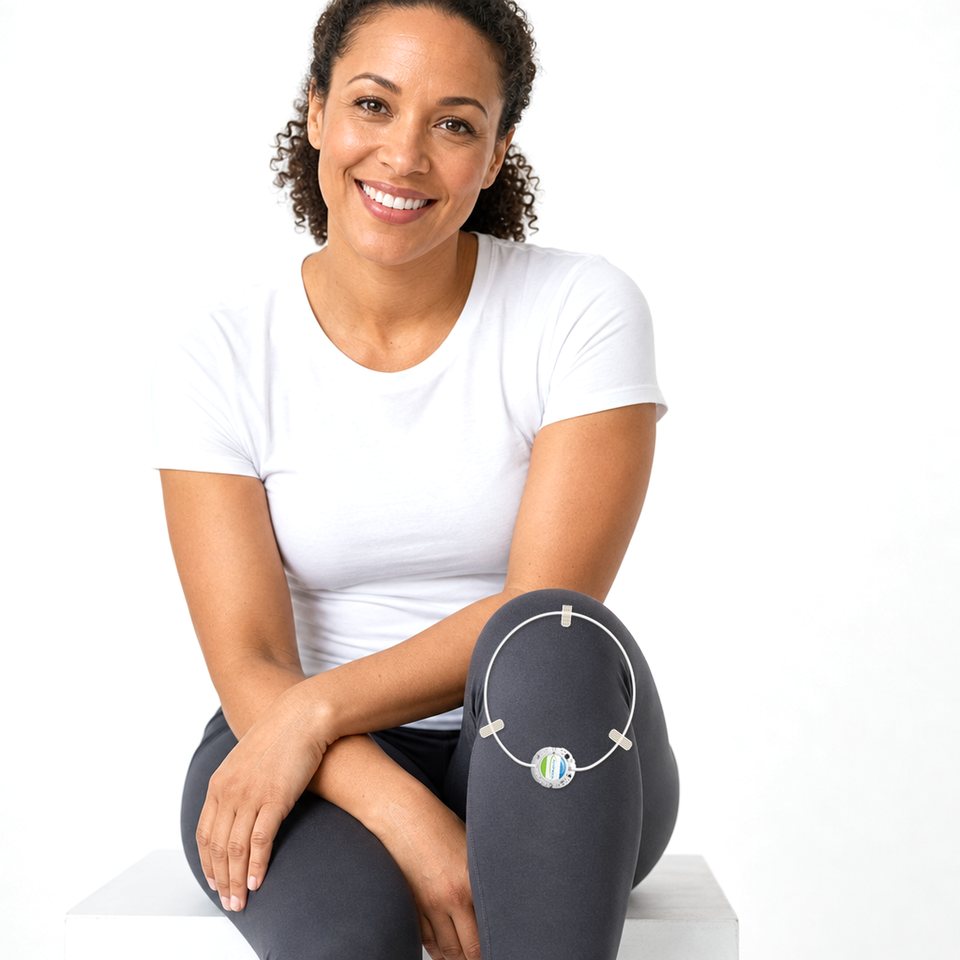
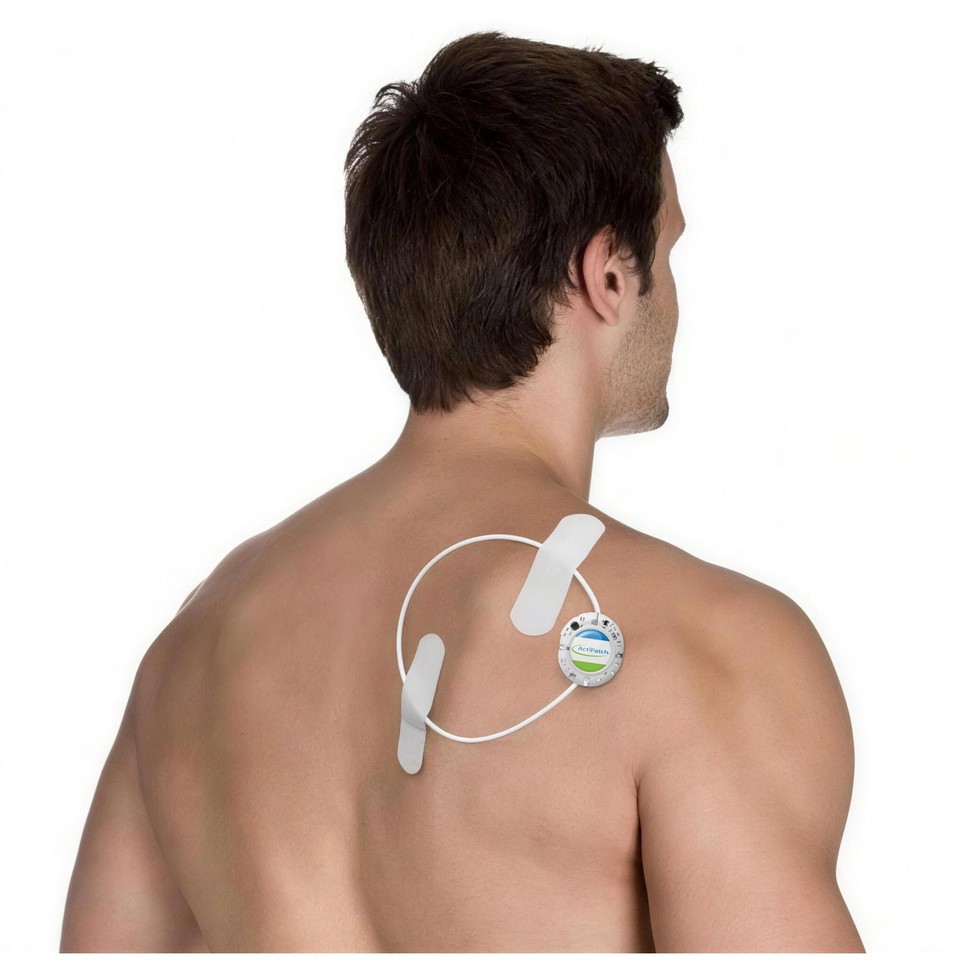
Worn where it hurts, on skin or over thin clothing.
Smiling Asian man with an ActiPatch® loop centered over his right elbow, secured with two white tape strips and its control unit resting on his forearm
ActiPatch® device
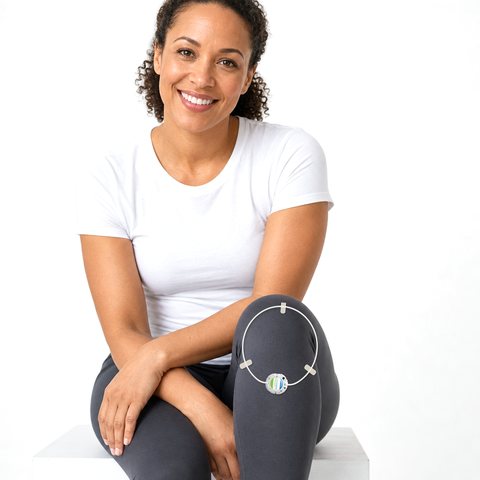
Smiling mixed-race woman wearing an ActiPatch® loop and control unit taped over thin leggings on her right knee
ActiPatch® device
South Asian woman wearing an ActiPatch® loop and control unit taped on the skin of her lower back
ActiPatch® device

67%of users cut or quit pain medsSource

NASA feasibility report · 2020ActiPatch® selected as #1 of 4 drug-free pain relief options evaluated for spaceflight feasibility →A practicality ranking, not a NASA endorsement or a comparison of pain relief.

See ActiPatch® in action

See how ActiPatch® fits into everyday life.

Watch more videos

What the research found

Studied in people who were already taking pain medicine

The trials compare ActiPatch® with a placebo device. The surveys follow real users at home with no placebo group, so read them as what users reported, not proof of cause. Individual results vary.

  • Customer survey

    72%

    of users taking pain medication reduced it

    In the manufacturer's US and Canada customer survey, 70% of responders were taking pain medication. Of those, 72% reported using less, and average pain relief was 50%.

    View the survey (opens in a new tab)
  • 3-month follow-up

    67%

    Cut pain meds moderately to completely

    Users followed for 3 months, including opioid users, reported moderate to complete elimination of pain medication. 70% also slept better, 74% were more active and 84% reported better quality of life.

    See the survey data (opens in a new tab)
  • User registry

    65%

    Reported a meaningful pain drop

    Of about 5,000 UK users who rated a 7-day trial, 65% reported pain down 2 or more points on a 0 to 10 scale. Their pain fell 57% on average.

    Read the study (opens in a new tab)
  • Randomized trial

    26%

    Stopped pain meds, vs 3% on placebo

    Knee osteoarthritis patients wore it 12 hours a day for a month. 8 of 30 on ActiPatch® stopped NSAIDs or painkillers, compared with 1 of 30 on an identical placebo device.

    Read the study (opens in a new tab)
  • Randomized trial

    40%

    Less morning heel pain in 7 days

    Plantar fasciitis patients wore it overnight for a week. Morning pain fell 40% on ActiPatch® versus 7% on placebo (70 people).

    Read the study (opens in a new tab)
  • 6-month follow-up

    52%

    Cut pain meds a lot or a fair amount

    240 users who got relief in week 1 were followed for 6 months. 52% reduced their medication meaningfully and about 28% stopped analgesics altogether.

    Read the study (opens in a new tab)
See all the clinical evidence (opens in a new tab)

Explore the manufacturer's collection of studies, surveys and charts.

How ActiPatch® compares on everyday convenience

Six practical wear-and-use differences, with sources in the full comparison. This is about convenience, not which device relieves pain better.

ActiPatch® refers to Model 088 and HFIT to Hinge Enso. TENS and NMES are categories of typical surface-electrode units, not single products. Each Yes or No describes the standard form of that category; the note under it names exceptions.

  • Yes
  • No

Scroll sideways to compare all four columns.

Convenience features of ActiPatch® PSWT, conventional TENS, HFIT (Hinge Enso) and NMES. Descriptions of model differences are not ratings of pain relief or of an entire device category.
Everyday useActiPatch®Pulsed Shortwave Therapy (PSWT)Conventional TENSNerve stimulationHFITHinge EnsoNMESMuscle stimulation
No skin electrodesYesNo pads or electrodesNoAdhesive pads go on the skinNoSkin-contact gel padsNoSkin-contact electrodes
Over thin clothingYesOn skin or over thin clothingNoPads go on bare skinNoGel pads go on bare skinNoElectrodes need skin contact
All-day wearYes12–24 hours/day; up to 720 operating hours for Model 088NoTimed sessions in the cited examples; PM400 shuts off after 15 minutesNoTreatment sessions, with length selected in the appNoProgram-based sessions; duration depends on the selected program
No phone appYesNo appYesOn-device controls; some models add an appNoApp-controlledYesOn-device controls; some systems add an app
No external wiresYesSelf-contained, no wiresNoLead wires from the unit to the pads; wireless models existYesWirelessNoLead wires from the unit to the electrodes
No chargingYesSealed built-in battery, fixed therapy hoursNoReplaceable batteries or rechargeable modelsNoRechargeable battery; charging requiredNoCompex SP 2.0 uses a rechargeable pack; check your model

Compare the features you need, then check the exact model's instructions. The full comparison names the examples and links to manufacturer documents.

Where does it hurt?

Choose an area for wearing guidance and related information.

The same standard ActiPatch® model is used for the areas shown. Pick an area for placement guidance, or go straight to the shop.

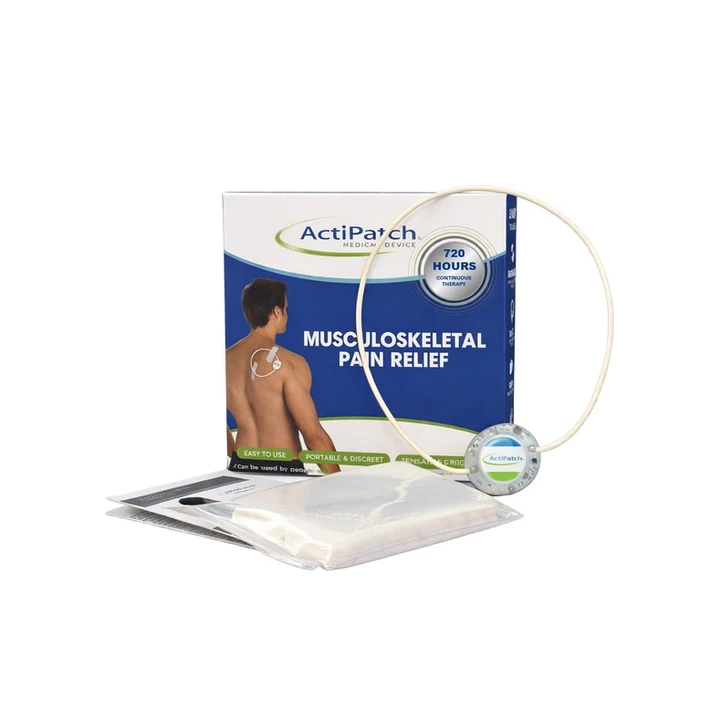
A single ActiPatch device: a thin white wire loop joined to a small round control unit

ActiPatch® deviceStandard loop: 12 cm (4.7 inches) in diameter. Image not to scale.

Optional: Pain Check, about 5 minutesBrowse all pain guides

From the evidence library

What does the evidence show?

ActiPatch® is FDA-cleared (510(k) K192234) for over-the-counter adjunctive treatment of musculoskeletal pain. These counts cover selected ActiPatch® clinical publications, not laboratory studies or studies of other devices. Study conditions and protocols differ, and individual results vary.

Published records
6
Each paper counted once
Randomized controlled trials
3
Library design label: RCT
Publication years
2012–2021
Earliest to latest record
What do clearance and research tell us?

FDA clearance identifies the device's permitted use; it is not an endorsement or a guarantee of results. The ActiPatch® pain trials did not measure circulation, tissue repair or inflammation.

Read the FDA clearance record (opens in a new tab)

How soon might I notice a difference?

Individual experiences vary. Many people report noticing relief within a few hours; for some, it can take up to four days of consistent wear. Keep following the package directions and do not change medications or prescribed care without speaking with your healthcare provider.

RCT2016 · Rheumatology (Oxford)

Pulsed Electromagnetic Fields in Knee Osteoarthritis: A Double-Blind Placebo-Controlled Randomized Clinical Trial

Bagnato GL, Miceli G, Marino N, Sciortino D, Bagnato GF

In a four-week, randomized, double-blind, placebo-controlled ActiPatch® trial in knee osteoarthritis, 66 people were randomized and 60 completed the study. The investigators reported improvements in pain and physical function compared with placebo. Participants wore the device 12 hours a day.

Read the source publication(opens in a new tab)
RCT2012 · Journal of Foot and Ankle Surgery

Pulsed Radiofrequency Electromagnetic Field Therapy: A Potential Novel Treatment of Plantar Fasciitis

Brook J, Dauphinee DM, Korpinen J, Rawe IM

A seven-day, randomized, double-blind, placebo-controlled trial studied nightly use for plantar fasciitis. Among 70 participants who completed the study, the active-treatment group reported a greater reduction in morning pain than the placebo group.

Read the source publication(opens in a new tab)
Pain-medication use

In a 4-week neck-pain trial, ActiPatch® users took fewer rescue painkiller doses than the prescription-drug comparison group.

200 adults with neck osteoarthritis: 6.7 rescue paracetamol doses with ActiPatch® versus 13.4 with etoricoxib. This single-center, manufacturer-funded trial was not blinded and had no sham group. The ActiPatch® group was older and had more pain at baseline.

Use alongside prescribed care. Ask your clinician before changing medicines.

Read the published study(opens in a new tab)

Evidence describes study results, not a promise of the same result for everyone. This is not medical advice.

Explore the full evidence library

Beyond pain · Healing research

What pulsed electromagnetic therapy does in the body

Pulsed electromagnetic therapy has also been studied in wounds, in the skin cells that close them, and in blood vessels. These studies used other pulsed devices, some at different frequencies from ActiPatch®.

  • Randomized trial · 72 women

    Better wound healing by day 7

    After cesarean section, women treated with a pulsed electromagnetic device had better wound healing at day 7, with no fluid, redness or swelling, than women with a sham device. Half as many had severe pain in the first day, and they used about half the painkillers.

    Studied with RecoveryRx®, a prescription-only device.

    Khooshideh et al., Clin J Pain 2017 (opens in a new tab)Read the full write-up
  • Lab study · Human skin cells

    Fibroblasts closed a wound gap faster

    Fibroblasts are the cells that rebuild skin. Fibroblasts taken from slow-healing leg ulcers grew faster and closed a scratch "wound" in the dish faster after a 27.1 MHz pulsed field, catching up to cells from healthy skin.

    Costantini et al., Bioengineering 2024 (opens in a new tab)Read the full write-up
  • Randomized trial · Mayo Clinic

    PEMF improved blood vessel function

    People with high blood pressure used a pulsed electromagnetic field (PEMF) device for 12 weeks or joined a control group. Arteries in the PEMF group widened better when blood flow increased, a key sign of healthy vessels, and their blood pressure dropped. The control group did not change.

    Stewart et al., J Clin Hypertens 2020 (opens in a new tab)Read the full write-up

ActiPatch® is FDA-cleared for musculoskeletal pain, not for wound care. A separate prescription-only device, RecoveryRx®, is used for post-operative therapy. Talk to your clinician about any wound that isn't healing.For providersIn the provider portal, clinicians prescribe and order RecoveryRx® for post-operative use.For patientsIn their patient account, patients with a prescription order RecoveryRx®. ActiPatch® can be chosen and bought in both portals.Shop ActiPatch®For everyday muscle and joint pain, ActiPatch® is available without a prescription.

Choose your pack

Each device gives 720 therapy hours. More devices let you cover a second area or keep a spare.

  • Single pack

    1 device plus adhesive tape

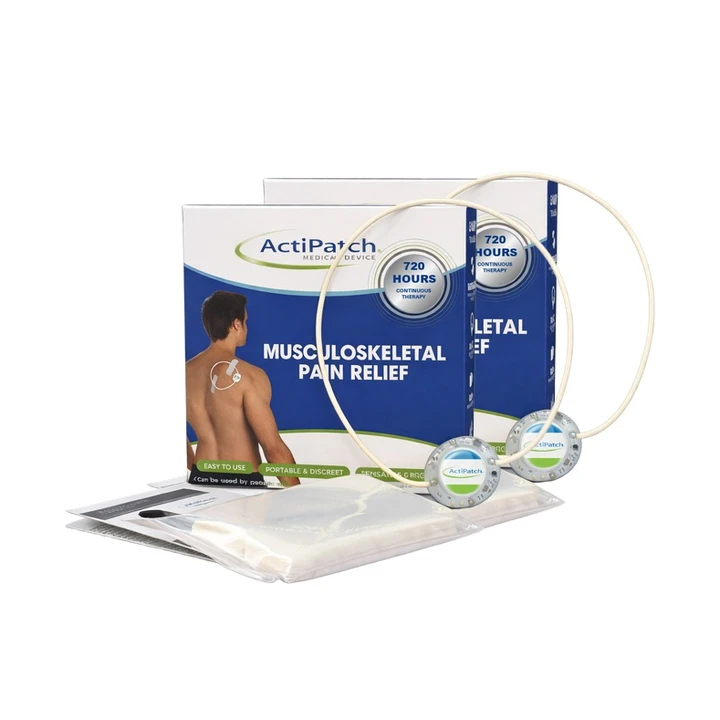
  • Double pack

    2 devices plus adhesive tape

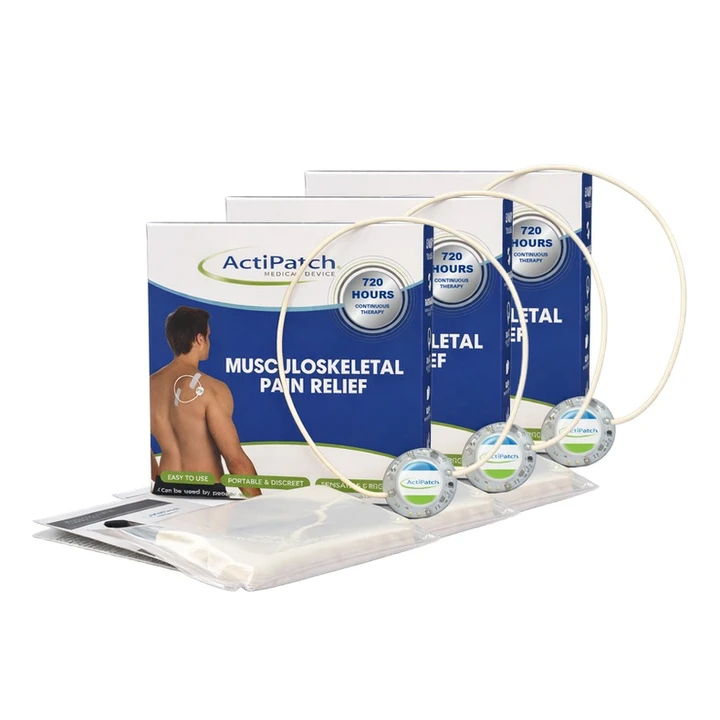
  • Triple pack

    3 devices plus adhesive tape

  • Free shipping on ActiPatch® single, double, and triple packs (US addresses only, through December 31, 2026)
  • 30-day money-back guarantee
  • Guest checkout, no account needed

Read it yourself

Sources

ActiPatch® is an FDA-cleared device (510(k) K192234) for over-the-counter adjunctive treatment of musculoskeletal pain. FDA clearance is not an endorsement or a guarantee of results. Survey and registry results are self-reported and have no placebo group. Individual results vary.

Pack contents, therapy hours and wear guidance come from the manufacturer directions for use. Prices come from the live store.

The Pain Check is educational and is not a diagnosis or medical advice. Do not stop or change any medication without talking to your doctor or pharmacist.

Essential questions and safety

Who should not use it

  • Do not use if you have a cardiac pacemaker, implanted defibrillator, or other active implanted metallic or electronic device.
  • Do not use if you are pregnant or think you may be pregnant.
  • Not for use by or on children under 17.
  • Do not use for sudden or unexplained pain, or if the cause of the pain is unknown. Not for pain deep in the body such as the chest or stomach, and not for cancer-related pain.
  • The device is not sterile. Do not place it in direct contact with open wounds.
  • Check in with your doctor if the pain changes, gets worse, or isn't easing after a few weeks. If you are under a doctor's care, consult your doctor before use.

Full safety informationMore answers in Help