Science

The ActiPatch® research, in one place

ActiPatch® is an over-the-counter FDA-cleared device built on pulsed shortwave therapy, a nonthermal form of electromagnetic therapy used as an adjunct in the treatment of musculoskeletal pain. This page lists every study and survey we cite, what each one found, how to read it, and the complete list of sources.

ActiPatch® is manufactured by BioElectronics Corporation (BIEL). Electrome holds the exclusive ActiPatch® license for North America, excluding Mexico.

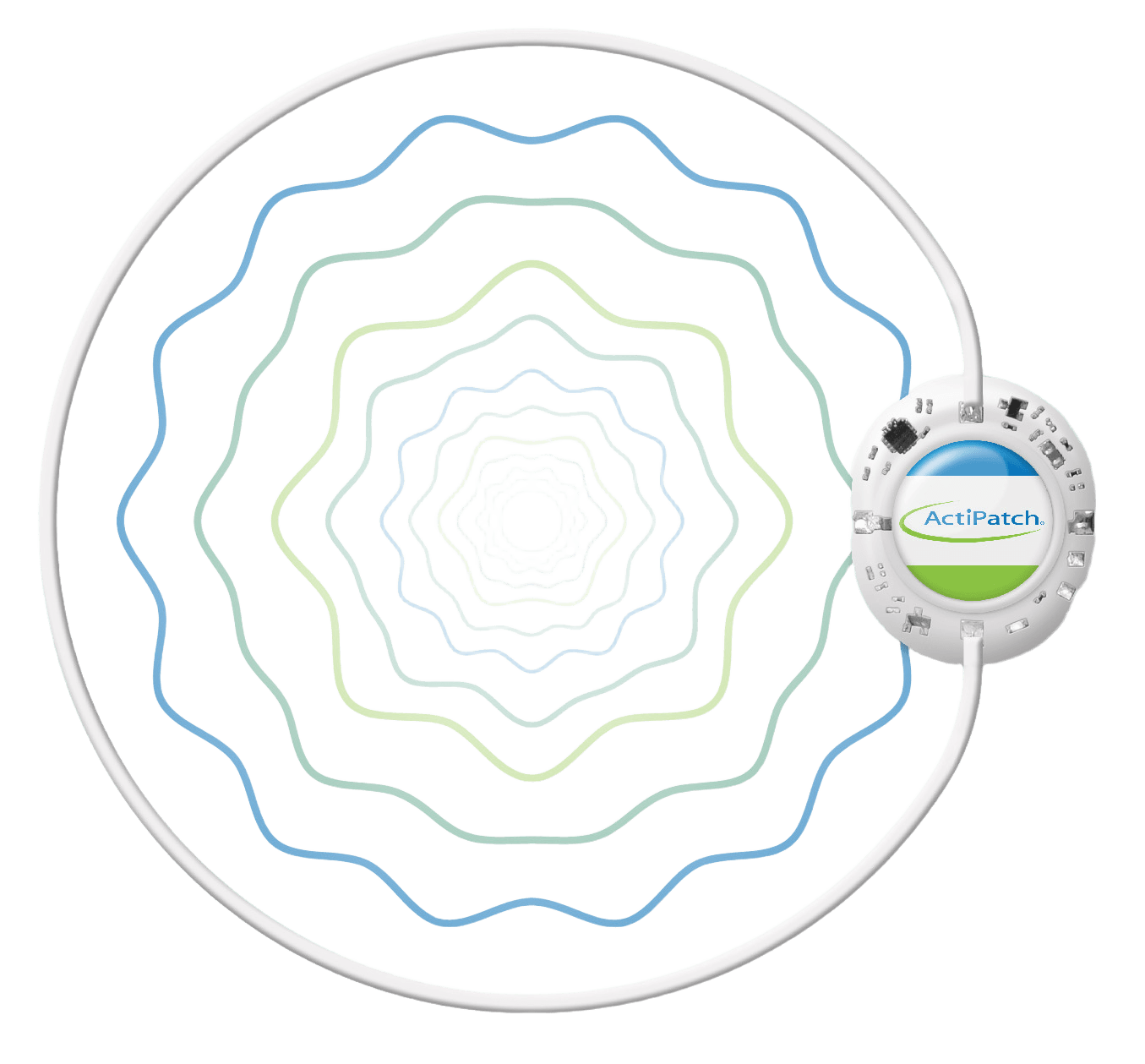
ActiPatch device with illustrative waves drawn inside its ring; the waves are artwork, not a depiction of a measured or biological effect

Standard loop: 12 cm (4.7 inches) in diameter.

Pulsed 27.12 MHz carrierBursts of RF energy, enlarged to show the carrier cycle
  • FDA-cleared technology
  • Non-opioid
  • No electrodes or gels

What does the research show about ActiPatch®?

In a placebo-controlled knee osteoarthritis trial (Bagnato 2016), pain fell about 25% with ActiPatch® versus about 4% with placebo after 1 month of wear. A placebo-controlled plantar fasciitis trial (Brook 2012) also reported less morning heel pain. Both trials measured pain, not healing, and individual results vary.

The approach

A bioelectric approach to pain relief

ActiPatch® uses pulsed shortwave therapy (PSWT), a nonthermal form of electromagnetic therapy. This is bioelectric therapy, also known as frequency medicine; ActiPatch® is an FDA-cleared, clinically tested example. A 27.12 MHz low-power radio-frequency signal, pulsed 1,000 times a second, passes into the tissue under the loop to quiet overactive pain nerves, with no drug, no heat, and no tingling. There are no electrodes, no gels, and no skin prep. Wear it directly on the skin with the included tape or over a thin layer of clothing, and avoid thick fabric between the device and the skin. The signal diagram at the top of this page is a schematic drawn for clarity, not a measured patient response. See how ActiPatch® works.

What the research found

More than a decade of published, peer reviewed results that have held up.

ActiPatch® has been tested in 4 controlled trials covering more than 350 patients, a UK registry with 5,000 user assessments, a 1,394 person chronic back pain registry and a 6 month follow up study of 240 chronic pain sufferers.

ActiPatch® earned FDA clearance twice: in 2017 for over the counter use, and again in January 2020 for adjunctive treatment of musculoskeletal pain, when FDA recorded that no device modifications had been made. That is the mark of a finished design. The same 27.12 MHz device that passed FDA review and the controlled trials is the one you receive today, with years of everyday use behind it.

Controlled trials compare ActiPatch® with a placebo device. Surveys and registries collect what users reported themselves, with no placebo group, so they do not prove cause. Individual results vary.

  1. 1Volunteers are split into two groups
  2. 2One group wears ActiPatch®, the other a look-alike device
  3. 3Researchers compare the two groups

Placebo-controlled trial. Results on ActiPatch® are compared with an identical placebo device.

  1. 1Users choose to answer questions
  2. 2Each describes their own experience
  3. 3Answers are collected without a placebo group

Customer survey or registry. Users report their own results. There is no placebo group.

  • 6-month follow-up · Chronic pain

    52%

    Cut pain meds a lot or a fair amount

    240 users who got relief in week 1 were followed for 6 months. 52% reduced their medication meaningfully and about 28% stopped analgesics altogether.

    Pain Research and Management, 2019

    Read the study (opens in a new tab)
  • Randomized trial · Knee osteoarthritis

    26%

    Stopped pain meds, vs 3% on placebo

    Knee osteoarthritis patients wore it 12 hours a day for a month. 8 of 30 on ActiPatch® stopped NSAIDs or painkillers, compared with 1 of 30 on an identical placebo device.

    Rheumatology (Oxford), 2016

    Read the study (opens in a new tab)
  • User registry · Chronic pain, UK

    65%

    Reported a meaningful pain drop

    Of about 5,000 UK users who rated a 7-day trial, 65% reported pain down 2 or more points on a 0 to 10 scale. Their pain fell 57% on average.

    Pain Management, 2015

    Read the study (opens in a new tab)
  • Randomized trial · Plantar fasciitis

    40%

    Less morning heel pain in 7 days

    Plantar fasciitis patients wore it overnight for a week. Morning pain fell 40% on ActiPatch® versus 7% on placebo (70 people). Part of the evidence FDA reviewed for the 2017 clearance, and again for the 2020 clearance.

    Journal of Foot and Ankle Surgery, 2012

    Read the study (opens in a new tab)
  • Customer survey · US and Canada

    72%

    of users taking pain medication reduced it

    In the manufacturer's US and Canada customer survey, 70% of responders were taking pain medication. Of those, 72% reported using less, and average pain relief was 50%.

    BioElectronics survey, 2012

    View the survey (opens in a new tab)
  • 3-month follow-up · Chronic pain

    67%

    Cut pain meds moderately to completely

    Users followed for 3 months, including opioid users, reported moderate to complete elimination of pain medication. 70% also slept better, 74% were more active and 84% reported better quality of life.

    BioElectronics follow-up data

    See the survey data (opens in a new tab)

What newer, independent research says

ActiPatch® belongs to the family of pulsed electromagnetic therapies. Independent research groups have kept studying that family, and their recent reviews point the same way as the ActiPatch® trials.

  • Meta-analysis · 2025

    Shoulder pain

    4 randomized trials with 252 patients, pooled in PLOS ONE, showed clinically significant short term pain relief and better function that lasted.

    Read the review (opens in a new tab)
  • Systematic review · 2023

    Low back pain

    9 randomized trials with 420 patients, reviewed at the Medical University of Vienna: the therapy was safe, and 5 of the 9 trials reported significant pain and function gains, especially alongside physical therapy.

    Read the review (opens in a new tab)
  • Meta-analysis · 2020

    Osteoarthritis pain

    16 placebo controlled trials pooled in Physical Therapy found a large, clinically significant effect of pulsed electromagnetic field therapy on pain, with smaller gains in stiffness and function.

    Read the review (opens in a new tab)

These reviews cover a range of pulsed electromagnetic devices and protocols, not ActiPatch® alone. Results vary by device, condition and person.

See all the clinical evidence (opens in a new tab)

Explore the manufacturer's collection of studies, surveys, and charts.

Evidence library

Every study and survey, with how to read it

Evidence is not interchangeable across devices. Read each finding alongside its design: trials compare an active device with a placebo or another treatment, while surveys and registries are self-reported with no placebo group. Individual results vary.

Controlled trials of ActiPatch® and pulsed shortwave therapy

These compare an active device with a placebo device or another treatment. Results describe the people studied and do not guarantee an individual result.

Randomized, double-blind, placebo-controlled trial · 60 people

Knee osteoarthritis randomized trial

Bagnato et al., Rheumatology (Oxford), 2016

People with knee osteoarthritis wore ActiPatch® or an identical placebo device 12 hours a day for a month. Pain and physical function improved more on ActiPatch®, and 8 of 30 stopped NSAIDs or painkillers, compared with 1 of 30 on placebo.

How to read it: A single 1-month trial in one condition. The trial did not measure circulation, tissue repair, or inflammation.

Randomized, double-blind, placebo-controlled trial · 70 people

Plantar fasciitis randomized trial

Brook et al., Journal of Foot and Ankle Surgery, 2012

People with plantar fasciitis wore the device overnight for a week. First-step morning heel pain fell 40% on the active device, compared with 7% on placebo.

How to read it: A short 7-day trial in one condition.

Open-label randomized trial · 200 people

Neck osteoarthritis trial compared with an NSAID

El Mohammad et al., SN Comprehensive Clinical Medicine, 2021

People with neck (cervical) osteoarthritis pain used ActiPatch® or took the NSAID etoricoxib, and outcomes were compared between the 2 groups.

How to read it: Participants knew which treatment they had, so expectations may affect reported outcomes. It is not a blinded placebo-controlled trial and does not show superiority over medicines.

Randomized, double-blind, placebo-controlled trial

1996 hip and knee osteoarthritis trial of pulsed shortwave therapy

Klaber Moffett et al., Pain, 1996

An older clinic-based pulsed shortwave therapy trial in hip and knee osteoarthritis found no statistically significant difference between the active and placebo groups.

How to read it: A different device and treatment schedule from ActiPatch®. It shows that results do not carry over automatically from one device to another.

User surveys and registries

These follow real users at home. They are self-reported and have no placebo group, so read them as what users reported, not proof of cause.

3-month follow-up survey

3-month user follow-up

BioElectronics Corporation, musculoskeletal pain evidence

Users followed for 3 months, including opioid users: 67% reported moderate to complete elimination of pain medication, 70% slept better, 74% were more active and 84% reported moderate to great improvement in quality of life.

How to read it: Self-reported, with no placebo group.

User registry · about 5,000 people

UK registry of 5,000 users

Rawe & Kotak, Pain Management, 2015

Of about 5,000 UK users who rated a 7-day trial, most started at a pain score of 8 or higher. 65% reported pain down 2 or more points on a 0 to 10 scale, and their pain fell 57% on average.

How to read it: A self-reported registry with no placebo group; it cannot by itself establish a treatment effect.

6-month follow-up · 240 people

6-month follow-up of 240 users

Staelin, Koneru & Rawe, Pain Research and Management, 2019

240 users who got relief in week 1 had lived with pain an average of 6.5 years. Over 6 months, 52% reduced their medication a lot or a fair amount and about 28% stopped analgesics altogether; 60% reported better sleep and 53% were more active.

How to read it: Only users who responded in week 1 were followed. Self-reported, with no placebo group.

Healing and circulation research with other devices

Pulsed electromagnetic therapy from other devices, some at different frequencies. These are research findings, not ActiPatch® indications. Read the healing research write-ups.

Randomized, double-blind, sham-controlled trial · 72 women

Cesarean section wound healing trial

Khooshideh et al., Clinical Journal of Pain, 2017

After cesarean section, women treated with a pulsed electromagnetic device had less pain, used fewer painkillers, and had better wound healing at day 7 than women with a sham device.

How to read it: Studied with RecoveryRx®, a prescription-only device. ActiPatch® is not cleared for wound care.

Lab study · Human skin cells

Ulcer fibroblast lab study

Costantini et al., Bioengineering, 2024

Skin cells (fibroblasts) taken from slow-healing leg ulcers grew faster and closed a scratch in the dish faster after exposure to a 27.1 MHz pulsed field.

How to read it: Cells in a dish, using a TSS Medical device. Lab results do not show an effect in people.

Controlled trial · 30 adults · Mayo Clinic

PEMF and blood vessel function trial

Stewart et al., Journal of Clinical Hypertension, 2020

Adults with high blood pressure used a pulsed electromagnetic field (PEMF) device for 12 weeks or joined a control group. Blood vessel function and blood pressure improved in the PEMF group only.

How to read it: A small study with a different PEMF device. The authors say more studies are needed.

ActiPatch® is FDA cleared for musculoskeletal pain, not for wound care. RecoveryRx®, a prescription-only device, is FDA cleared for adjunctive treatment of postoperative pain. Published study findings on this technology also include wound healing, which is not a cleared indication for either device.

For providersIn the provider portal, clinicians prescribe and order RecoveryRx® for post-operative use.My CareIn Consumer: My Care, people with a valid prescription order RecoveryRx®.

How the signal works

Engineering research on how low-power RF fields couple to tissue.

Engineering study

How low-power RF fields modulate nerves

Koneru, Westgate & McLeod, J Biomed Sci Eng, 2016

Analyzes how a low-power pulsed radio-frequency field can be rectified in body tissue, the engineering background for how ActiPatch® delivers its signal.

How to read it: An engineering analysis, not a clinical trial.

Research context

Background reading. Not clinical evidence and not an endorsement of any product.

Regulatory record

The public FDA record for ActiPatch®.

FDA 510(k) clearance · 2020

FDA clearance record

510(k) K192234

ActiPatch® is FDA cleared for over-the-counter adjunctive treatment of musculoskeletal pain and can be used alongside other treatments.

How to read it: The clearance defines what may be said about the device.

For each paper's full record, see the publications library and the knee osteoarthritis evidence hub. Research context: a 2020 NASA feasibility assessment ranked pulsed shortwave therapy first among 4 pain relief approaches for practical use in spaceflight. NASA study summary.

Compared with TENS

How PSWT differs from TENS and NMES

TENS and NMES pass electrical current through skin electrodes. ActiPatch® emits a low-power pulsed radio-frequency field with no electrodes. The side-by-side comparison of design and use lives in one place. The cited trials do not establish superiority over TENS.

Read ActiPatch® vs TENS and NMES

Read it yourself

Complete sources list

  1. All ActiPatch® musculoskeletal pain evidence (opens in a new tab). BioElectronics Corporation, manufacturer.
  2. Pulsed electromagnetic fields in knee osteoarthritis: a double blind, placebo-controlled, randomized clinical trial (opens in a new tab). Bagnato et al., Rheumatology (Oxford), 2016.
  3. Pulsed radiofrequency electromagnetic field therapy: a potential novel treatment of plantar fasciitis (opens in a new tab). Brook et al., Journal of Foot and Ankle Surgery, 2012.
  4. Pulsed Shortwave Therapy in Cervical Osteoarthritis: an NSAID-Controlled, Randomized Clinical Trial (opens in a new tab). El Mohammad et al., SN Comprehensive Clinical Medicine, 2021.
  5. A placebo controlled double blind trial to evaluate the effectiveness of pulsed short wave therapy for osteoarthritic hip and knee pain (opens in a new tab). Klaber Moffett et al., Pain, 1996.
  6. ActiPatch® customer survey, US and Canada (opens in a new tab). BioElectronics Corporation, April 2012 summary.
  7. 3-month user follow-up (opens in a new tab). BioElectronics Corporation, musculoskeletal pain evidence.
  8. A UK registry study of the effectiveness of a new over-the-counter chronic pain therapy (opens in a new tab). Rawe & Kotak, Pain Management, 2015.
  9. A Prospective Six-Month Study of Chronic Pain Sufferers: A Novel OTC Neuromodulation Therapy (opens in a new tab). Staelin, Koneru & Rawe, Pain Research and Management, 2019.
  10. Pulsed Electromagnetic Fields for Postsurgical Pain Management in Women Undergoing Cesarean Section: A Randomized, Double-Blind, Placebo-controlled Trial (opens in a new tab). Khooshideh et al., Clinical Journal of Pain, 2017.
  11. Pulsed Radiofrequency Electromagnetic Fields as Modulators of Inflammation and Wound Healing in Primary Dermal Fibroblasts of Ulcers (opens in a new tab). Costantini et al., Bioengineering, 2024.
  12. Impact of pulsed electromagnetic field therapy on vascular function and blood pressure in hypertensive individuals (opens in a new tab). Stewart et al., Journal of Clinical Hypertension, 2020.
  13. Rectification of RF Fields in Load Dependent Coupled Systems: Application to Non-Invasive Electroceuticals (opens in a new tab). Koneru, Westgate & McLeod, J Biomed Sci Eng, 2016.
  14. NASA feasibility report on electromagnetic pain relief (opens in a new tab). Mullenax, NASA NTRS 20205008893, 2020.
  15. FDA clearance record (opens in a new tab). 510(k) K192234.

Ready to try drug-free pain relief?

ActiPatch® is available over the counter for adjunctive treatment of musculoskeletal pain, including heel pain associated with plantar fasciitis.

$39.99Single pack, one device
Shop ActiPatch®
Learn about providers

Informational use only, not medical advice. ActiPatch® is FDA cleared (510(k) K192234) for over-the-counter adjunctive treatment of musculoskeletal pain and can be used alongside other treatments. Individual results may vary. Consult your healthcare provider before starting any new therapy.

Have a question about the science?

Science Copilot
Answers come only from verified EvidenceOS sources and curated Electrome / ActiPatch® public facts.
Appearance