ActiPatch® vs TENS: How Are They Different?
By Electrome Corporation · Published September 26, 2026
ActiPatch® and TENS devices both come up when people talk about pain relief. They work in different ways. ActiPatch® is an FDA 510(k) cleared (K192234) over-the-counter wearable for adjunctive treatment of musculoskeletal pain. A TENS unit sends electrical current through electrodes on the skin. Neither is the right choice for everyone.
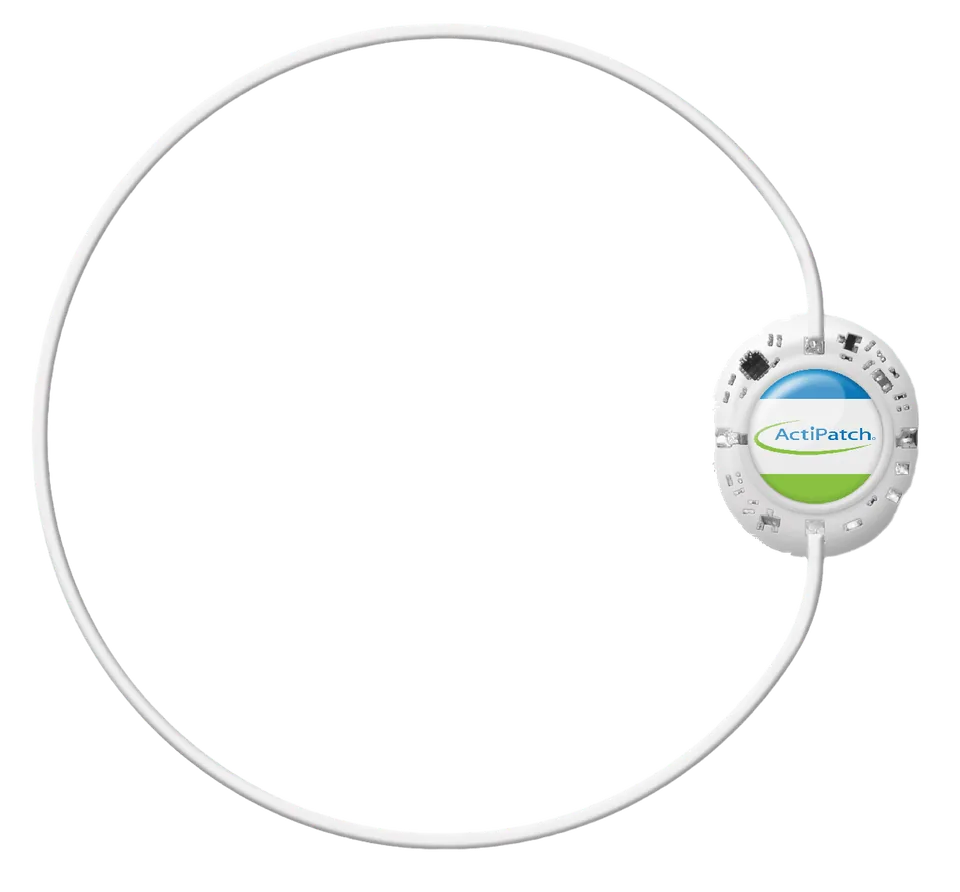
Two ways to deliver energy
ActiPatch® (PSWT)
One loop with a small control unit. No electrode pads or connecting leads. No tingling expected.
Conventional TENS
Transcutaneous electrical nerve stimulation. Pads on the skin, joined by wires to a unit. Often felt as tingling.
Daily use, side by side
Compare everyday convenience, not pain-relief effectiveness. ActiPatch® refers to Model 088 and HFIT to Hinge Enso. TENS and NMES are categories of typical surface-electrode units, not single products.
Everyday differences
| Feature | ActiPatch®Pulsed Shortwave Therapy (PSWT) | Conventional TENSNerve stimulation |
|---|---|---|
| Works without skin electrodes | YesNo pads or electrodes | NoAdhesive pads go on the skin |
| Works over thin clothing | YesOn skin or over thin clothing | NoPads go on bare skin |
| All-day wear, no timed sessions | Yes12–24 hours/day; up to 720 operating hours for Model 088 | NoTimed sessions in the cited examples; PM400 shuts off after 15 minutes |
| Works without a phone app | YesNo app | YesOn-device controls; some models add an app |
| Works without external wires | YesSelf-contained, no wires | NoLead wires from the unit to the pads; wireless models exist |
| No batteries to replace or charge | YesSealed built-in battery, fixed therapy hours | NoReplaceable batteries or rechargeable models |
| Over the counter, no prescription | YesSold over the counter | YesMany over-the-counter models |
| Ongoing supplies | Tape or a wrap to hold it in place | Replacement electrode pads |
Technical detailsDelivery, sensation, contraction, and intensity. Informational, not an effectiveness ranking.
| Feature | ActiPatch®Pulsed Shortwave Therapy (PSWT) | Conventional TENSNerve stimulation |
|---|---|---|
| Delivery method | Pulsed shortwave electromagnetic energy from a wire loop | Electrical current through electrodes on the skin |
| What you feel | Usually nothing | Tingling or buzzing |
| Muscle contraction | No | Not the aim at usual settings |
| Intensity | Fixed, nothing to adjust | User-adjustable |
- PSWT
- Pulsed shortwave therapy: low-power electromagnetic pulses, no current through pads.
- TENS
- Transcutaneous electrical nerve stimulation: mild current through skin pads.
- HFIT
- Hybrid-form impulse therapy, used by Hinge Health's wireless Enso device.
- NMES
- Neuromuscular electrical stimulation: current that makes muscles contract.
No gel pads. No charging. No app.
- No skin electrodes or adhesive pads
- Wear on skin or over thin clothing
- 12 to 24 hours a day, no timed sessions
- Fixed 720 operating hours, nothing to recharge
Design and use differences, not an overall device ranking or a measure of pain relief. Do not use ActiPatch® with a pacemaker, ICD, or other implanted electronic device, or if pregnant; read the package insert.
Sources and scope13 manufacturer and FDA references. Checked October 13, 2026.
FDA clearance. ActiPatch® is an FDA-cleared Class II device for adjunctive treatment of musculoskeletal pain, sold over the counter (FDA 510(k) K192234 (ActiPatch®) (opens in a new tab)). Many TENS and NMES devices are FDA cleared too, so clearance is not unique to any column.
ActiPatch®. Wear and operating hours refer to Model 088 (ActiPatch® Model 088 instructions (opens in a new tab)). Remove it before bathing or showering and follow its warnings and precautions.
TENS. Hinge Health: What is TENS therapy? (opens in a new tab). OMRON Pocket Pain Pro PM400 instructions (opens in a new tab) describes electrode cords, buttons, and AAA batteries; OMRON Avail PM601 instructions (opens in a new tab) describes wireless, app-controlled operation with a rechargeable battery. Neither represents all TENS devices.
HFIT (Hinge Enso). Hinge Health Enso (opens in a new tab), FDA: Enso device system, K233784 (opens in a new tab) and Hinge Health: Enso session controls (opens in a new tab). HFIT is Hinge Health's term; Enso is described as TENS in its FDA labeling, so the categories overlap.
NMES. FDA: Electronic muscle stimulators (opens in a new tab), Compex: electrode placement and care (opens in a new tab), Compex SP 2.0 / SP 4.0 / FIT instructions (opens in a new tab) (wired, button-controlled, rechargeable), Compex wireless EMS models (opens in a new tab) (wireless electrodes) and Compex: optional coaching apps and device-control apps (opens in a new tab) (optional coaching versus app-controlled devices).
Scope. ActiPatch® refers to Model 088 and HFIT to Hinge Enso. TENS and NMES are categories of typical surface-electrode units, not single products. This is a delivery and use comparison, not evidence of comparative effectiveness. Examples are not a complete product list or an endorsement; labeling can differ by model and country. Follow your device's instructions. Sources checked October 13, 2026.
What does each device actually deliver?
TENS means transcutaneous electrical nerve stimulation. A typical setup puts sticky electrode pads on the skin and sends a controlled electrical current between them. The user often adjusts the strength and may feel tingling. Settings and wear instructions depend on the model, so the maker's directions matter more than a general chart.
ActiPatch® uses pulsed shortwave therapy (PSWT). It sends a 27.12 MHz radio-frequency signal in pulses instead of current between two pads. At its designed output the field is nonthermal and sub-sensory, so do not expect the buzzing of many TENS units. Feeling nothing does not tell you whether pain relief has or has not happened.
How do placement and wear differ?
With ActiPatch®, put the loop over the painful area. Hold it on skin with the included tape or a wrap, or place it over thin clothing such as a T-shirt or leggings. Avoid thick fabric between the device and skin. You can move the loop when you change activities. Follow the package instructions, especially for warnings and placement.
TENS electrodes generally need to touch skin. Where they go and how long each session lasts depends on the device and purpose. If you use TENS on a clinician's advice, do not change that plan because of a comparison article. Do not place ActiPatch® over an implanted electronic device.
What about therapy time and day-to-day use?
One ActiPatch® provides up to 720 therapy hours. Running it nonstop would use them in at most about 30 days. Switching it off between uses spreads them over more days. This is arithmetic, not a guaranteed lifespan. The built-in CR2032 battery cannot be replaced or charged. ActiPatch® is made for everyday wear, including activity and sweating, with IP22-rated water protection. Remove it before showering, bathing, or swimming.
Many TENS products are built for timed sessions, with removable pads and adjustable settings. Some can be worn longer, so no one length fits every TENS unit. Check a product's manual rather than treating all TENS devices alike. Think about whether you want a self-contained device or adjustable electrical stimulation.
What does the research establish?
Published ActiPatch®-related PSWT studies include the double-blind, placebo-controlled knee pain study by Bagnato and colleagues in Rheumatology (2016) and the plantar fasciitis heel-pain study by Brook and colleagues in the Journal of Foot and Ankle Surgery (2012). They looked at pain in their own study groups. They did not compare ActiPatch® with TENS. Registries describe what users report. They cannot show which option works better.
ActiPatch® is FDA cleared (510(k) K192234) for over-the-counter adjunctive treatment of musculoskeletal pain, and can be used alongside other treatments. Clearance describes the cleared use. It does not show ActiPatch® works better than TENS. Ask a clinician about new, severe, or unexplained pain, and about how to fit this in with your care.
How should you decide?
Start with what you need and each device's instructions. If you want adhesive electrodes or adjustable sensations, those point toward TENS. If you want no electrode leads and a preset operating pattern, ActiPatch® is a different way to work. Whether it suits you also depends on your medical history and where you plan to wear it.
Do not use ActiPatch® if you have a pacemaker, ICD, or other implanted electronic device, or if you are or may be pregnant. Read the package insert first. You can read the research on our science page, then see the store listing. Neither replaces a personal clinical assessment.
Frequently asked questions
Is ActiPatch® a TENS unit?
No. ActiPatch® delivers pulsed shortwave therapy at 27.12 MHz; TENS delivers electrical stimulation through skin-contact electrodes.
Is ActiPatch® proven better than TENS?
No head-to-head superiority claim is supported by the cited trials. The mechanisms and daily-use patterns differ; the right choice depends on the individual and their clinician’s advice.
Do I have to feel ActiPatch® working?
No. ActiPatch® is designed to operate without a tingling sensation. Follow the indicator-light and operating instructions in the package insert.
Primary sources
Educational information only. ActiPatch® is FDA 510(k) cleared (K192234) for over-the-counter (OTC) adjunctive treatment of musculoskeletal pain. Read the package instructions and consult a clinician about persistent or worsening pain.